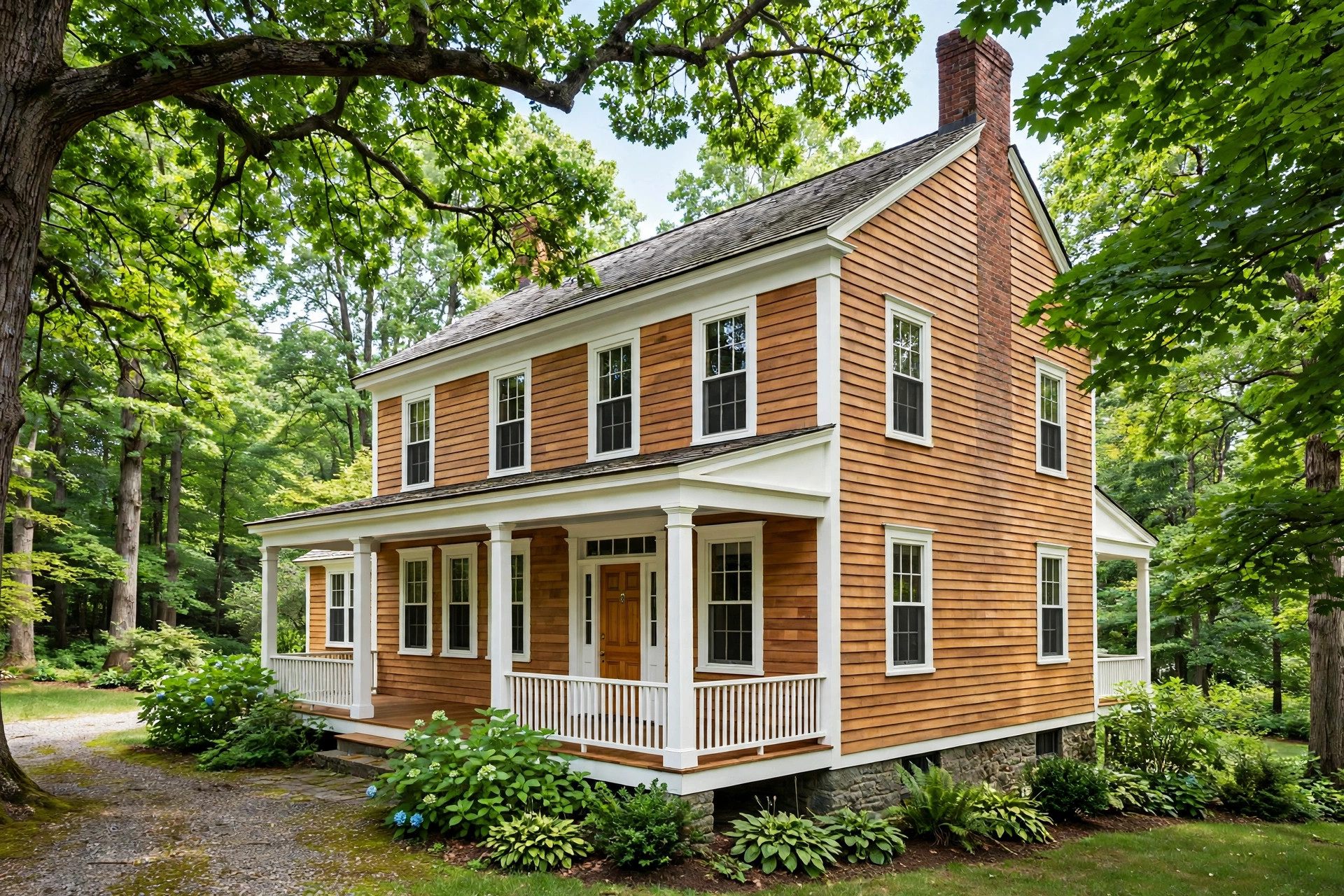
Nothing matches the warmth of real wood siding — but engineered wood products like LP SmartSide promise a similar look with better resistance to rot and insects. For DC homeowners weighing authenticity against practicality, here is how natural wood and engineered wood compare.
Natural Wood Siding
Cedar and redwood are the classic choices, prized for rich grain and natural resistance to decay. On DC's historic homes, original wood siding is part of the architectural character, and preservation guidelines usually call for wood or a close match on visible facades.
The honest downside is maintenance. Wood needs regular painting or staining, and DC's humidity, driving rain, and termite pressure punish neglected wood quickly. Rot, splitting, and insect damage are constant risks without diligent upkeep. For homeowners who love the look and will maintain it, though, nothing else quite compares.
Engineered Wood Siding
Engineered wood siding, such as LP SmartSide, is made from wood strands bonded with resins and treated for durability, then coated with a durable finish. It is designed to deliver the look of wood with improved resistance to rot, termites, and impact damage.
It installs much like traditional wood, takes paint beautifully, and is lighter than fiber cement. The main considerations: it still needs its finish maintained over time, cut edges must be sealed during installation, and — like any product — its long-term performance depends heavily on correct installation details such as flashing and clearances.
Side-by-Side Comparison
- Appearance: Natural wood has unmatched depth and variation; engineered wood comes convincingly close with consistent quality.
- Maintenance: Both need finish upkeep, but natural wood demands more frequent attention, especially in humid climates.
- Rot and insects: Engineered products are treated for resistance; natural cedar resists decay on its own but remains vulnerable without maintenance, and termites love neglected wood.
- Historic suitability: Natural wood is the gold standard for historic districts; engineered wood is sometimes accepted — check with your review board.
- Repairs: Both repair in sections, and boards are easier to patch or replace than with some other materials.
What Works Best in Washington, DC?
DC's humid summers and freeze-thaw winters are tough on exterior wood. If your home is in a historic district, natural wood — or a historically appropriate match — is often required on street-facing walls, and restoration may be the right path. Elsewhere, engineered wood offers an attractive middle ground: genuine wood character with better moisture and pest resistance.
Either way, installation quality decides the outcome. Proper flashing, house wrap, sealed cuts, and correct clearances above grade are non-negotiable in this climate. The local contractors we connect you with can assess your current siding and recommend the right material for your home and budget.
Frequently Asked Questions
Does engineered wood siding attract termites?
Engineered wood products are treated to resist termites and decay far better than untreated wood. That said, no siding makes a home termite-proof — keeping soil and mulch away from the siding and maintaining finishes still matters.
How often does wood siding need painting?
It depends on exposure, wood species, and paint quality, but wood siding generally needs repainting or re-staining more often than fiber cement. South- and west-facing walls weather fastest.
Can I replace only damaged wood boards?
Often, yes. One advantage of wood siding is that individual rotted or split boards can be replaced without redoing the whole wall — provided matching profiles are available.
Is engineered wood allowed in historic districts?
Policies vary by district. Some review boards accept high-quality engineered wood that mimics traditional profiles; others insist on natural wood. Always verify before you buy materials.
Need help choosing for your home? Call (206) 360-4969 and we will connect you with a local siding pro who can inspect your exterior and give you honest guidance on wood versus engineered wood.
Ready to Talk Siding?
Call (206) 360-4969 and get connected with a local Washington, DC siding contractor today.
☎ (206) 360-4969