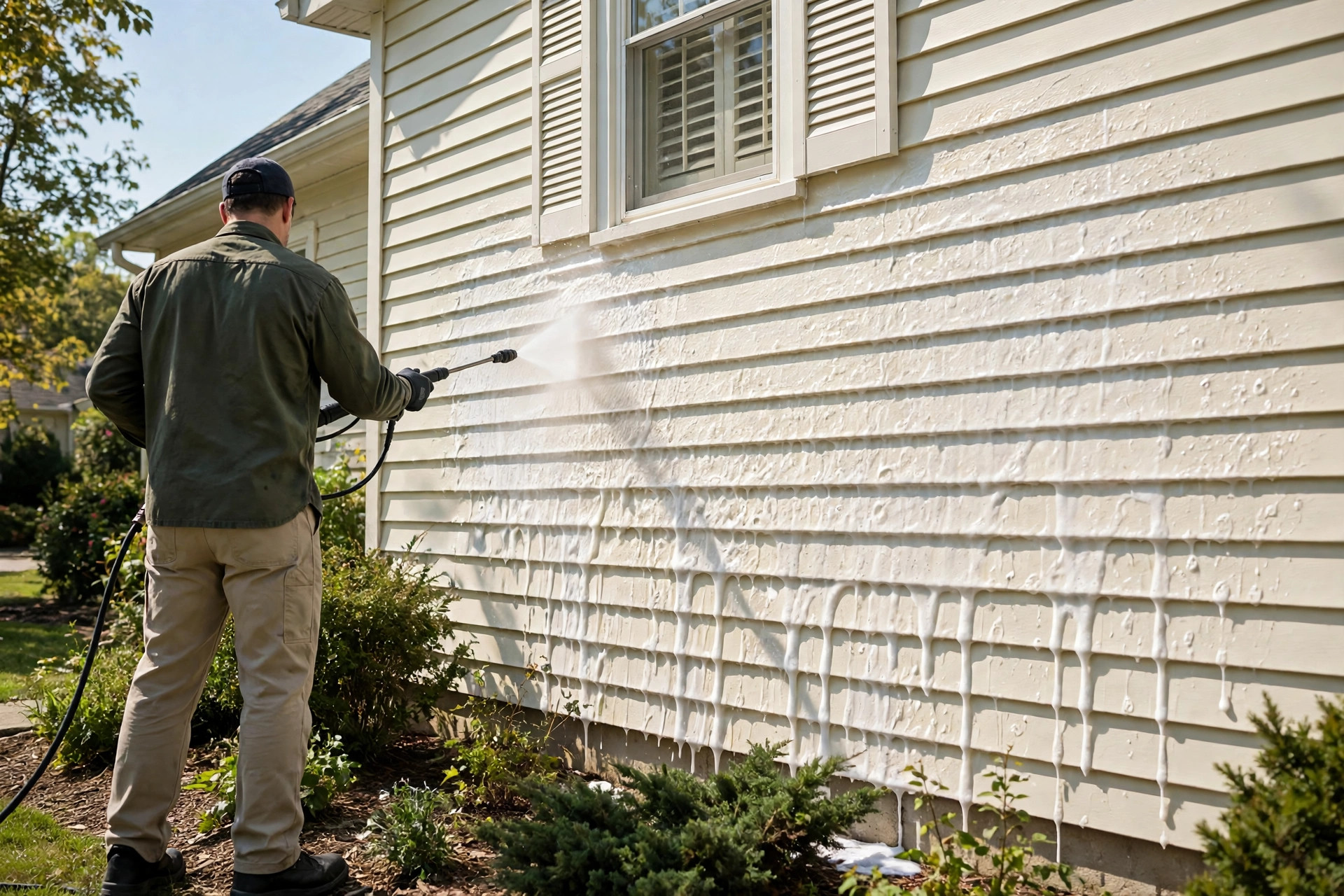
Soft washing — low-pressure water combined with cleaning solutions — is generally safer for siding than high-pressure washing, which can force water behind panels, strip finishes, and damage siding materials. For most homes, soft washing cleans better with far less risk.
How Each Method Works
Pressure washing relies on force: water at thousands of PSI blasts dirt off surfaces. It is effective on hard surfaces like concrete and brick pavers, but that same force is destructive on siding — it can crack vinyl, dent aluminum, drive water behind panels, and etch wood.
Soft washing relies on chemistry: biodegradable cleaning solutions loosen dirt, mildew, and algae, which are then rinsed away at garden-hose-like pressures. The solution does the work, so the water does not have to. Dwell time replaces brute force.
The Risks of Pressure Washing Siding
- Water intrusion: high pressure drives water behind siding and into wall cavities, where it can cause rot and mold — the opposite of cleaning.
- Surface damage: vinyl can crack, paint can strip, and wood grain can fur or splinter under aggressive pressure.
- Warranty issues: some siding manufacturers specifically warn against high-pressure washing, and damage from it may not be covered.
- Etching and streaking: uneven technique leaves visible striping that is hard to undo.
Even when pressure washing seems to work fine, hidden water intrusion may not reveal itself until months later as interior stains or musty odors.
When Pressure Washing Is Acceptable
Pressure washers have their place — just usually not on siding. They are appropriate for concrete driveways, walkways, and sturdy masonry, kept at safe distances with fan tips. Some professionals use controlled, moderate pressure on certain siding types with proper technique, but this is a judgment call for experienced operators, not a DIY starting point.
DC's Mildew Factor
Washington, DC's humid summers grow mildew and green algae on siding aggressively, especially on shaded north-facing walls. Soft washing is particularly effective here because the cleaning solution kills the organisms at the root rather than just blasting the surface growth away. Pressure-washed mildew often returns within months; properly soft-washed siding stays clean much longer.
DIY or Hire a Pro?
Light DIY cleaning with a garden hose, soft brush, and siding-safe cleaner is fine for maintenance. But for whole-house washing, especially on multi-story homes, professionals bring the right solutions, equipment, and plant-protection practices. They also know which areas — around windows, vents, and electrical fixtures — need extra care to prevent water intrusion.
When hiring, ask what method they use and why. A reputable exterior cleaning company will explain whether your siding calls for soft washing or a careful low-pressure rinse, and they should carry insurance just like any contractor working on your home. Be cautious of anyone who treats every surface — siding, roof, and concrete alike — with the same high-pressure approach.
Frequently Asked Questions
Will soft washing kill my plants?
Reputable soft-wash operators pre-wet and rinse landscaping and use plant-safe practices. Mention prized plantings beforehand so the crew takes extra care around them.
How often should siding be washed?
Once a year suits most DC homes; shaded or heavily treed properties may benefit from more frequent cleaning to control mildew.
Can soft washing remove oxidation on vinyl?
Light oxidation, yes. Heavy chalking that powders off on your hand usually means the vinyl surface is degrading — cleaning helps appearance but replacement is the long-term answer.
Is bleach-based soft washing safe for siding?
Professional soft-wash solutions are formulated for exterior use and rinsed thoroughly. They are widely used by professionals, but solutions must be properly diluted and rinsed — another reason technique matters.
Clean siding lasts longer and looks dramatically better. If your home's exterior needs more than a rinse — or the siding underneath the grime is damaged — Washington DC Siding Pros connects homeowners with local siding contractors. Call (206) 360-4969 to get connected today.
Ready to Talk Siding?
Call (206) 360-4969 and get connected with a local Washington, DC siding contractor today.
☎ (206) 360-4969