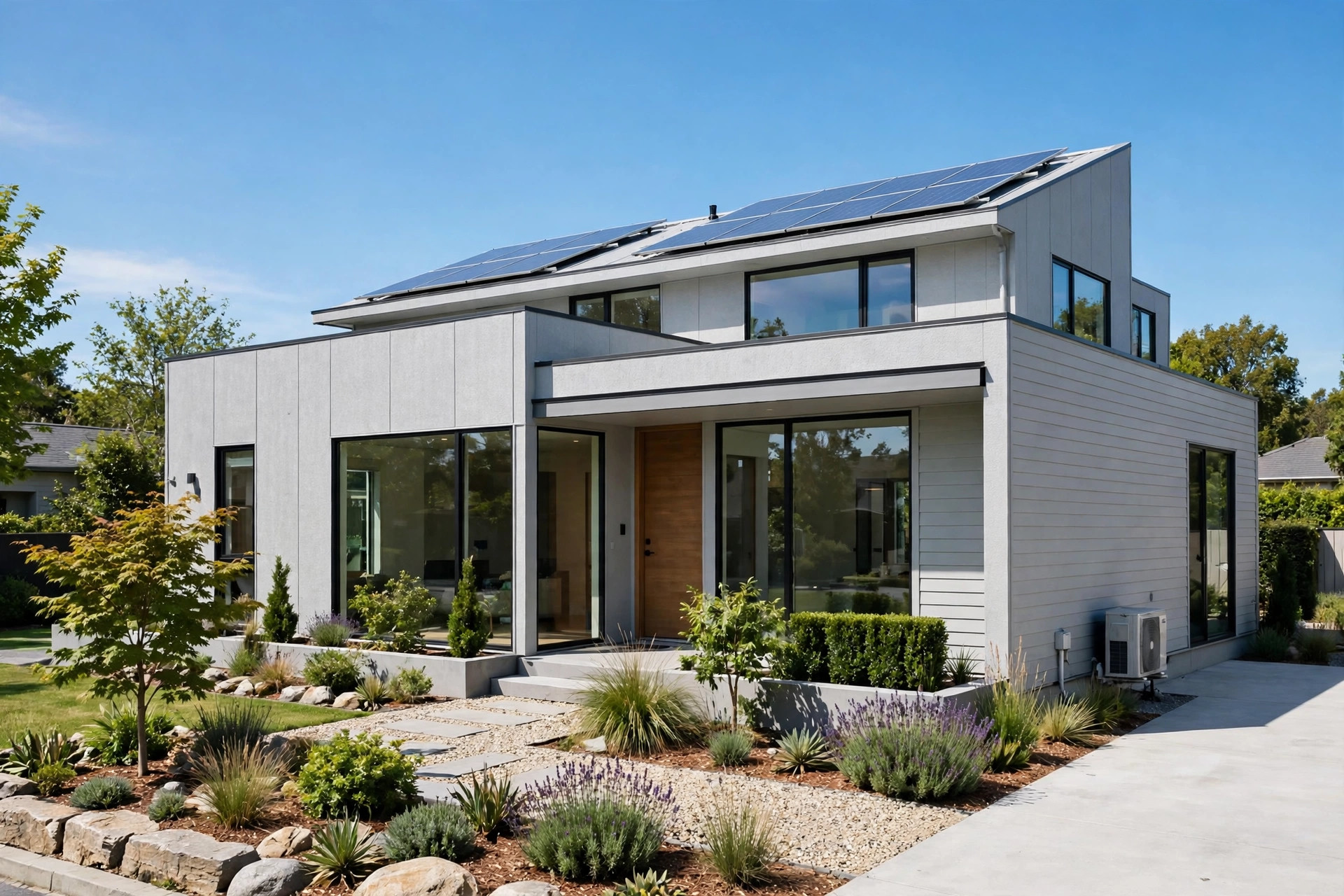
The most energy-efficient siding choices combine insulating cladding with proper air sealing and a quality weather barrier. Insulated vinyl, fiber cement installed over exterior foam, and well-detailed engineered wood can all reduce heat transfer — but installation quality and air sealing matter at least as much as the material itself.
What Makes Siding Energy Efficient
Energy performance comes from the whole wall assembly, not the siding alone. Three factors do most of the work:
- Continuous insulation: insulation that covers studs as well as cavities, reducing thermal bridging through the framing.
- Air sealing: sealing gaps around windows, doors, penetrations, and joints so conditioned air stays inside. Air leaks can waste more energy than thin insulation.
- Reflectivity: lighter colors reflect more solar heat, reducing cooling loads in summer — a real factor in DC's hot, humid months.
A contractor who focuses only on the siding material while ignoring air sealing is leaving much of the potential savings on the table.
Comparing the Options
Insulated vinyl siding offers the simplest path: foam-backed panels add continuous insulation in the same step as the cladding. It is cost-effective relative to other insulated assemblies and performs well in mixed climates like DC's.
Fiber cement over exterior foam pairs a durable, fire-resistant cladding with rigid foam boards underneath. This is a premium assembly with excellent thermal performance, commonly used in high-performance renovations — though material and labor costs run higher.
Engineered wood siding has modest inherent insulating value and, when installed over foam sheathing with careful air sealing, forms an efficient assembly. Its main appeal is the authentic wood look with better durability than natural wood.
Standard vinyl or aluminum over a good weather barrier is the baseline. Efficient? Not especially — but pairing it with blown-in cavity insulation or exterior foam during the project can still yield a strong result.
The DC Climate Factor
Washington, DC sits in a mixed-humid climate zone: real winters with freeze-thaw cycles and long, humid summers. That means walls need to handle moisture moving in both directions across the seasons. Assemblies that insulate well but trap moisture are a poor trade — which is why vapor-permeable weather barriers and ventilated cladding remain important even in an efficiency-focused project.
Many DC rowhouses have uninsulated masonry or wood-framed walls. For these homes, any siding project is a rare chance to add insulation from the exterior — an opportunity worth discussing with your contractor before the old siding comes off.
Getting the Most From Your Investment
To maximize efficiency during a siding project, ask your contractor about:
- Adding exterior rigid foam beneath the new siding
- Sealing penetrations, joints, and the rim joist area while walls are accessible
- Upgrading attic insulation and air sealing at the same time
- Choosing lighter colors to cut summer cooling loads
These measures compound — insulation plus air sealing plus reflectivity delivers far more than any single upgrade alone.
Frequently Asked Questions
Will energy-efficient siding lower my bills noticeably?
It can, especially in under-insulated homes, but savings depend on your starting point, local energy costs, and how leaky the house was. Treat efficiency as improved comfort with bill savings as a bonus, not a guaranteed payback figure.
Does siding color really affect energy use?
Yes, measurably in summer. Dark colors absorb significantly more solar heat than light colors, raising cooling demand. In DC's hot summers, lighter siding is the efficiency-friendly choice.
Is insulated siding enough, or do I need wall insulation too?
They work best together. Insulated siding adds continuous exterior insulation; cavity insulation fills the stud bays. A contractor can advise which combination makes sense for your home's construction.
Can efficiency upgrades cause moisture problems?
Only if done poorly. Tightening a home without managing moisture can trap humidity indoors. Proper ventilation, vapor-permeable barriers, and professional design prevent this — another reason to work with experienced contractors.
Planning an efficiency-minded siding project? Washington DC Siding Pros connects homeowners with local siding contractors who understand building science, not just installation. Call (206) 360-4969 to get connected with a local pro.
Ready to Talk Siding?
Call (206) 360-4969 and get connected with a local Washington, DC siding contractor today.
☎ (206) 360-4969