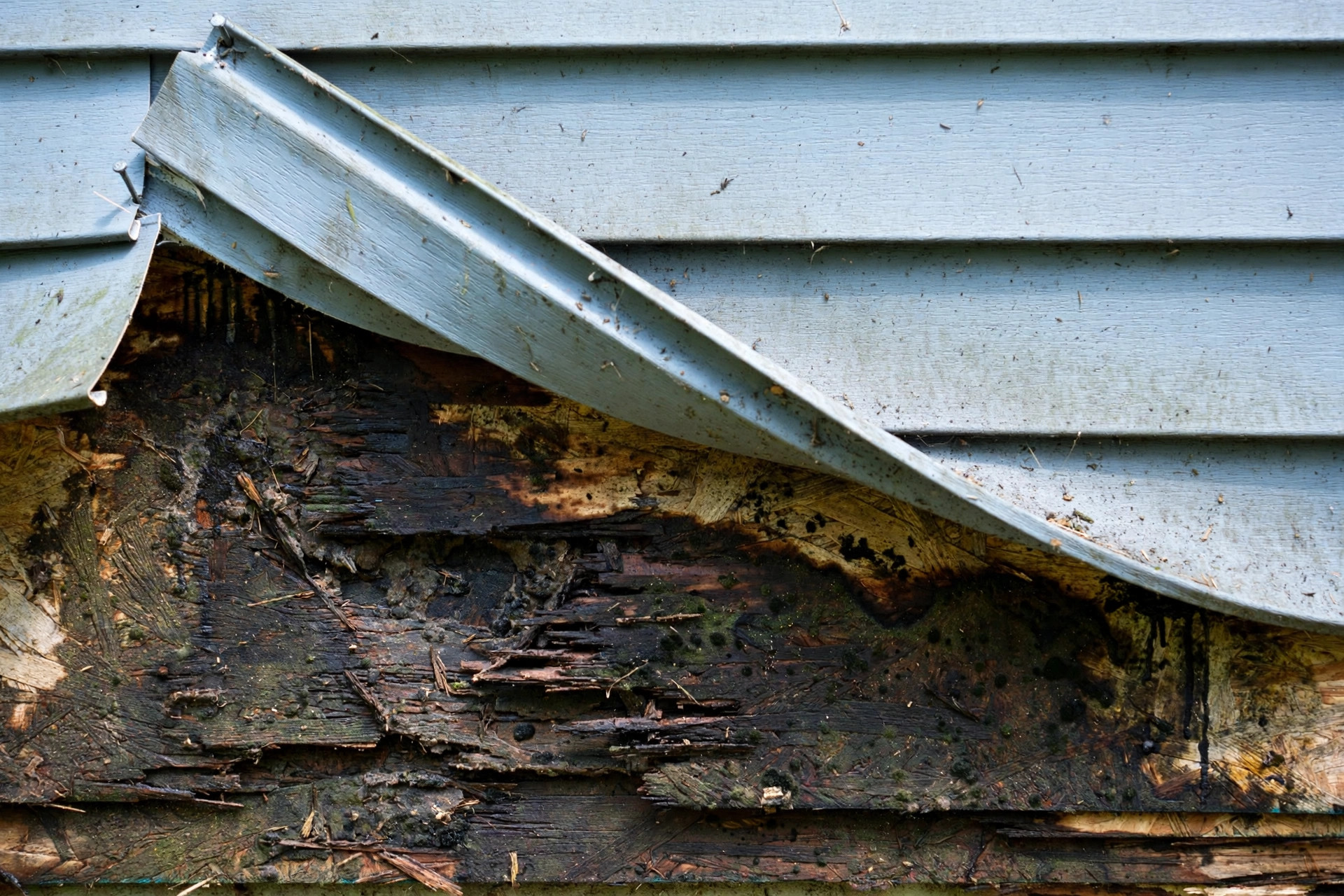
Your siding's job is to shed water — but when water gets behind it instead, the damage happens where you cannot see it: rotting sheathing, mold growth, and compromised framing. In humid Washington, DC, moisture behind siding is one of the most destructive hidden problems a home can have. Here are the warning signs to watch for.
What You Can See on the Outside
Bubbling, Blistering, or Peeling Paint
When moisture pushes outward through the wall, paint bubbles, blisters, or peels — especially on wood siding. If repainting does not fix it and the problem returns in the same spots, moisture behind the siding is the likely culprit, not bad paint.
Warped, Buckled, or Swollen Boards
Boards that swell, cup, or pull away from the wall are absorbing moisture. On wood siding this is a classic sign; on any siding type, panels that no longer sit flat deserve investigation.
Staining and Discoloration
Dark streaks below windows, rust-colored stains, or green-black algae growth concentrated in certain areas point to chronic wetting. Efflorescence — white mineral deposits — on masonry near siding transitions also signals water movement through the wall.
What You Can Notice Inside
Damp Spots and Water Stains
Stains on interior walls or ceilings, particularly on exterior walls and near windows, mean water is traveling through the wall assembly. Do not dismiss small stains — they often indicate a larger hidden problem.
Musty Odors and Visible Mold
A persistent musty smell near exterior walls, or mold growth on interior surfaces, suggests moisture is trapped inside the wall cavity. In DC's climate, mold can establish quickly once conditions are right.
Peeling Interior Paint or Warping Floors
Moisture migrating through walls can peel interior paint and even warp hardwood floors near exterior walls. These are late-stage signs — the problem has been developing for a while.
Why Moisture Gets Behind Siding
Water intrusion usually traces back to failed details, not failed siding: missing or deteriorated flashing around windows and doors, absent kick-out flashing where roofs meet walls, clogged or overflowing gutters, cracked caulk at trim joints, or siding installed without a proper weather-resistant barrier. On older DC homes, decades of layered repairs can hide these defects until damage is extensive.
What to Do About It
Surface symptoms deserve a professional look beneath the surface. A qualified siding contractor can remove sections of siding to inspect the sheathing, check moisture levels, and identify the entry points. The fix always has two parts: repairing the damaged wall materials and correcting the flashing, drainage, or ventilation defect that let water in. Addressing only one part guarantees a repeat.
Frequently Asked Questions
Can moisture behind siding dry out on its own?
Rarely in DC's humid climate. Without airflow and a corrected water entry problem, trapped moisture persists and damage progresses. Active investigation and repair are needed.
How does a contractor check for hidden moisture?
Professionals use moisture meters, probe behind siding at suspect areas, and visually inspect sheathing when siding is removed. Infrared cameras can also reveal temperature patterns consistent with wet insulation.
Is mold behind siding dangerous?
Mold in wall cavities can affect indoor air quality and indicates ongoing moisture damage. It should be addressed as part of the repair — not just covered up with new siding.
Will new siding fix the problem?
Only if the underlying cause is fixed at the same time. New siding over a wall with failed flashing just hides the problem while damage continues. Make sure your project includes proper weather barriers and flashing details.
Suspect moisture behind your siding? Call (206) 360-4969 and we will connect you with a local siding pro who can investigate, find the source, and recommend the right fix for your DC home.
Ready to Talk Siding?
Call (206) 360-4969 and get connected with a local Washington, DC siding contractor today.
☎ (206) 360-4969