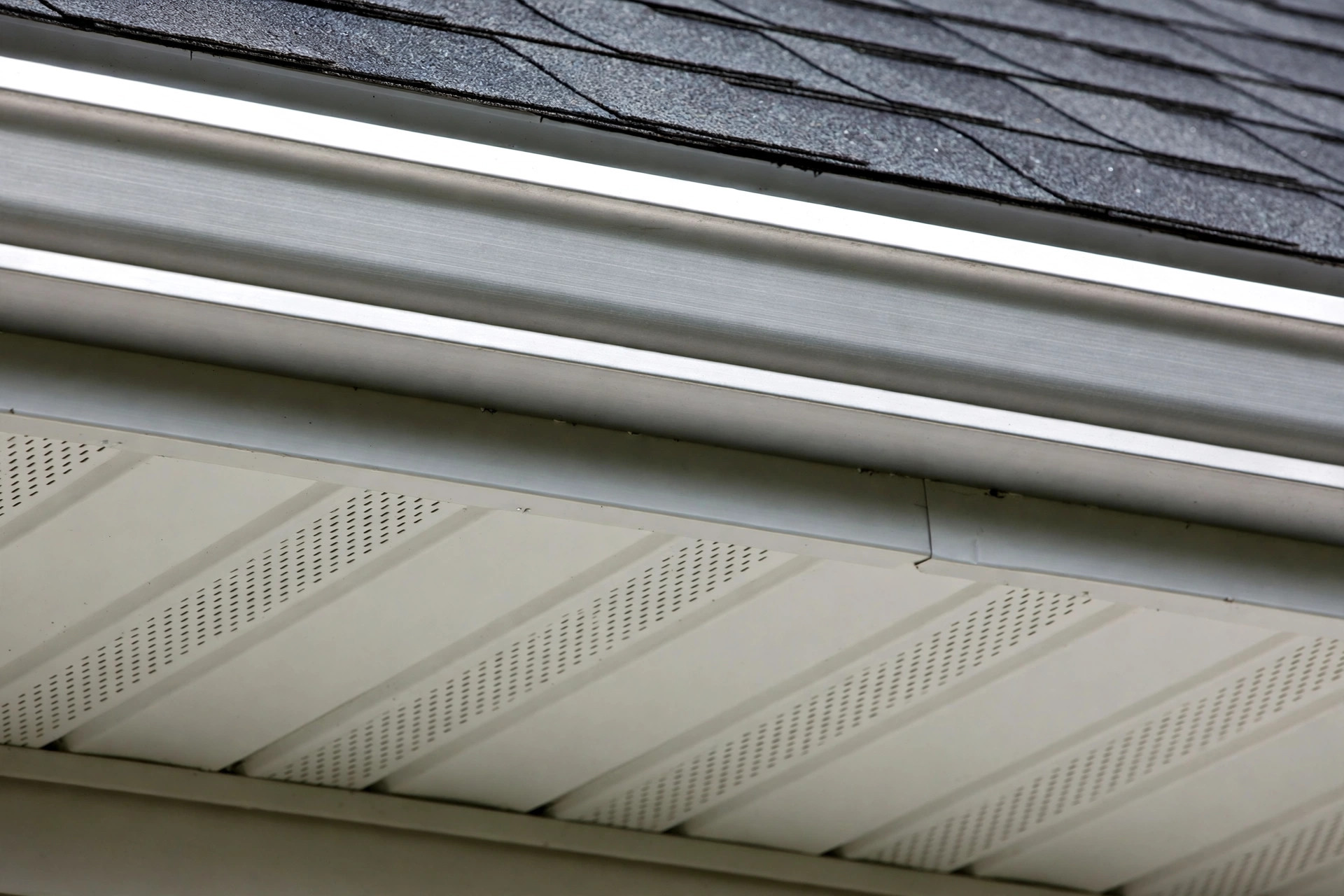
Soffit is the finished material covering the underside of your roof's overhang, while fascia is the vertical board running along the roof's edge where gutters attach. Together they protect your rafters from weather and pests, help ventilate the attic, and give your roofline a clean, finished appearance.
What Soffit and Fascia Do
Though they sit at the edge of the roof, soffit and fascia do heavy lifting. The fascia caps the ends of the rafters, shields them from rain, and provides a sturdy surface for gutter mounting. The soffit closes off the underside of the overhang, keeping birds, squirrels, and insects out of the attic while often housing the intake vents that feed attic ventilation.
Beyond function, they are highly visible. Worn, peeling, or mismatched soffit and fascia can drag down the look of an otherwise well-kept home — which is why they are frequently replaced or wrapped in low-maintenance aluminum during a siding project.
Common Materials
- Vinyl soffit: affordable, low-maintenance, and available in vented or solid panels. A popular pairing with vinyl siding.
- Aluminum fascia and soffit: durable, rust-resistant, and often custom-bent on site to fit. Commonly used to wrap existing wood trim.
- Wood: traditional and paintable, but vulnerable to rot and woodpeckers without regular maintenance.
- Fiber cement: rot- and pest-resistant with a wood-like look, at a higher material cost.
Signs Yours Need Attention
Because they sit at the roofline, soffit and fascia take a beating from rain, sun, and temperature swings. Watch for:
- Peeling, bubbling, or flaking paint on wood fascia
- Soft or rotted spots, especially where gutters overflow
- Sagging or detached soffit panels
- Evidence of animals or insects entering through gaps
- Staining that suggests water is getting behind the boards
In Washington, DC, humid summers encourage rot in neglected wood trim, and winter freeze-thaw cycles widen small cracks. Rowhouses with flat or low-slope roofs are especially prone to fascia damage where water lingers at the roof edge.
Repair or Replace?
Small, isolated issues — a single rotted fascia board or one loose soffit panel — can often be repaired. But when rot is widespread, paint is failing across large areas, or pests have found their way in, replacement with low-maintenance materials usually makes more sense. Many homeowners coordinate soffit and fascia work with a siding replacement, since the crew, scaffolding, and color matching are already on site, which can simplify scheduling.
Vented soffit panels deserve special mention: if your attic relies on soffit intake vents, those vents must stay clear. Painting over them or covering them with solid panels can choke off airflow and lead to moisture problems upstairs.
Frequently Asked Questions
What is the difference between soffit and fascia?
Soffit is the horizontal surface under the roof overhang; fascia is the vertical board at the edge of the roof. Fascia holds the gutters, while soffit often contains the vents that let fresh air into the attic.
Can soffit and fascia be replaced without replacing the roof?
Yes. Soffit and fascia work is routinely done independently of roof replacement, though it pairs naturally with siding or gutter projects since the work areas overlap.
How do I know if animals are getting in through the soffit?
Scratching or scurrying sounds in the attic, droppings near the eaves, and visible gaps or chew marks on soffit panels are classic signs. A contractor can inspect and seal entry points with pest-resistant materials.
Is aluminum wrapping over wood fascia a good idea?
Wrapping sound wood fascia in aluminum is a common low-maintenance upgrade, but the underlying wood must be solid and dry first. Wrapping over rotted wood traps moisture and hides a worsening problem.
Your roofline works hard to protect your home — keep it in good shape and it will return the favor for decades. If your soffit or fascia shows signs of wear, Washington DC Siding Pros can connect you with local siding contractors experienced in roofline repairs. Call (206) 360-4969 to get connected today.
Ready to Talk Siding?
Call (206) 360-4969 and get connected with a local Washington, DC siding contractor today.
☎ (206) 360-4969