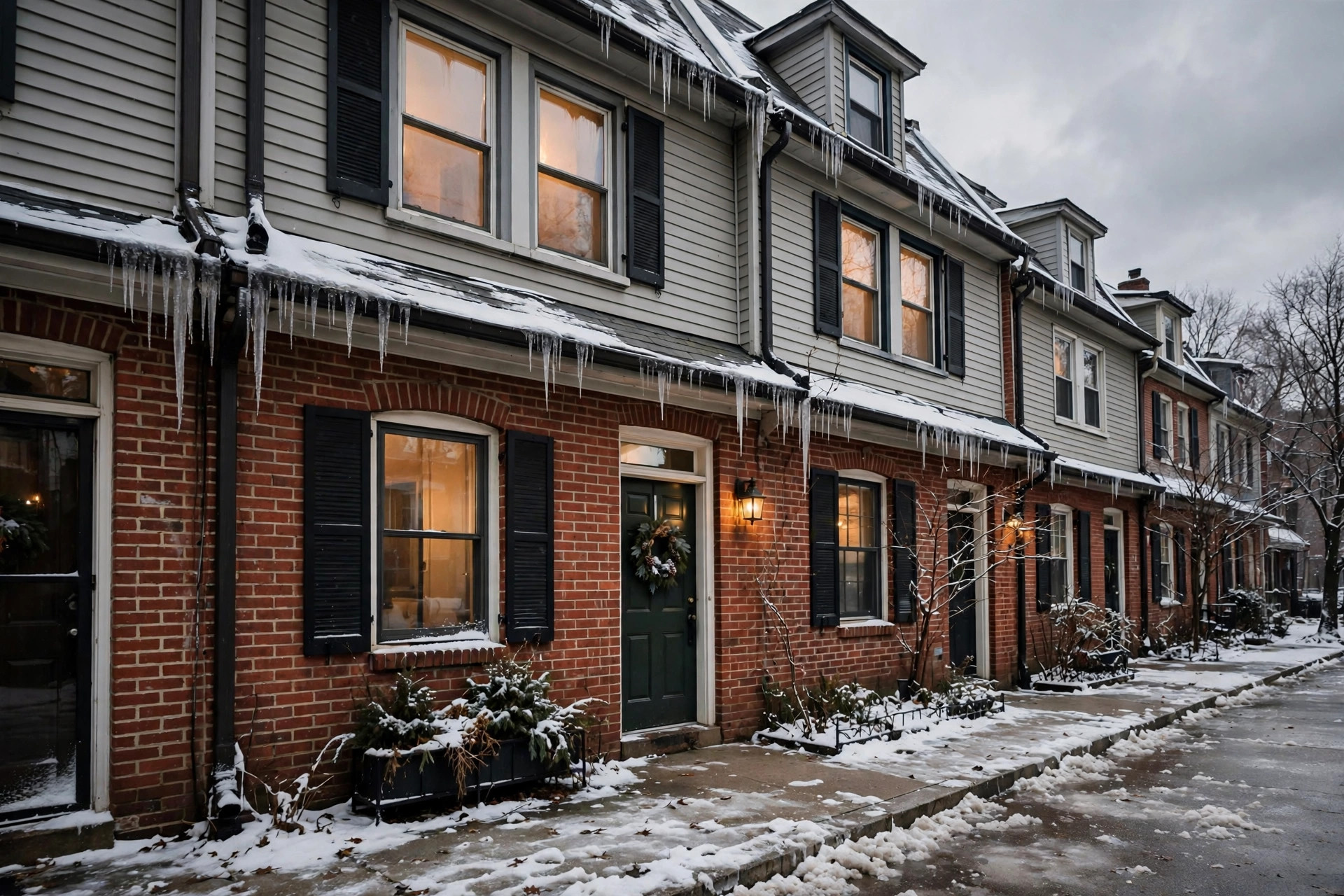
Before winter arrives, inspect your siding for cracks and gaps, seal openings around penetrations, clean your gutters, and trim overhanging branches. DC's freeze-thaw cycles exploit small weaknesses relentlessly — a little fall preparation prevents mid-winter emergencies.
Why Winter Is Hard on Siding
Washington, DC winters bring repeated freeze-thaw cycles: moisture seeps into tiny cracks during the day and expands as it freezes at night, widening the cracks a little more each time. Over a season, this pries open gaps in caulk, splits wood, and loosens panels. Add the occasional ice storm or heavy wet snow, and winter becomes the year's toughest test for your exterior.
Wind is the other culprit. Winter storms find every loose panel and piece of trim, and once wind gets underneath siding, it can peel back whole sections. What starts as one loose panel in December can become a wall of missing siding by February.
Your Pre-Winter Checklist
- Inspect every wall for cracks, gaps, and loose panels — repair now, not in January
- Re-caulk around windows, doors, vents, and trim where sealant has dried or pulled away
- Clean gutters and downspouts so meltwater drains instead of overflowing onto siding and trim
- Trim branches that could break under ice and strike the house
- Check the ground: soil and mulch should slope away from walls so meltwater does not pool against siding
- Secure loose trim and shutters before the first big wind event
Gutters and Ice Dams
DC's freeze-thaw pattern is ideal for ice dams: snow melts on a warmer upper roof, refreezes at the colder eaves, and the resulting ice backs water up under shingles and into walls. Clean gutters help, but the real fix is attic insulation and ventilation that keep the roof surface uniformly cold. If you see large icicles or ice ridges at your eaves regularly, the attic — not the gutter — is usually the problem.
Overflowing gutters soak fascia boards and the siding below, accelerating rot. In winter this damage compounds because wet wood then freezes, splitting fibers further.
What to Watch Mid-Winter
After major storms, do a quick visual check from the ground: missing panels, hanging gutters, and new gaps are all worth addressing promptly. Do not climb icy ladders for a closer look — binoculars work fine for spotting problems to handle when conditions improve.
If wind tears siding off, cover the exposed area with a secured tarp as a temporary measure and arrange repairs. Exposed sheathing and house wrap are not designed for prolonged weather exposure, and every storm that hits the bare wall increases the eventual repair scope.
Frequently Asked Questions
Can siding be replaced in winter?
Yes, with caveats. Vinyl becomes brittle in extreme cold and must be handled carefully, and sealants need suitable temperatures to cure. Experienced contractors work through DC winters routinely — they simply adjust techniques for conditions.
Should I knock icicles off my gutters?
Do not yank them — you can damage gutters and fascia. If icicles are massive or you suspect an ice dam, the underlying cause (usually attic heat loss) matters more than the symptom. A professional assessment beats aggressive chipping.
Does snow against siding cause damage?
Piled snow holds moisture against the bottom courses of siding for extended periods, which can lead to water intrusion and rot. Keep snow from banking up against walls where practical.
What is the single most important winter prep step?
Sealing gaps and securing loose pieces. Winter weather attacks weaknesses — a tight, well-sealed exterior weathers storms far better than one with small openings everywhere.
Winter is coming whether your siding is ready or not — make sure it is ready. If your fall inspection reveals damage, Washington DC Siding Pros connects homeowners with local siding contractors who work through the season. Call (206) 360-4969 to get connected today.
Ready to Talk Siding?
Call (206) 360-4969 and get connected with a local Washington, DC siding contractor today.
☎ (206) 360-4969